


Back
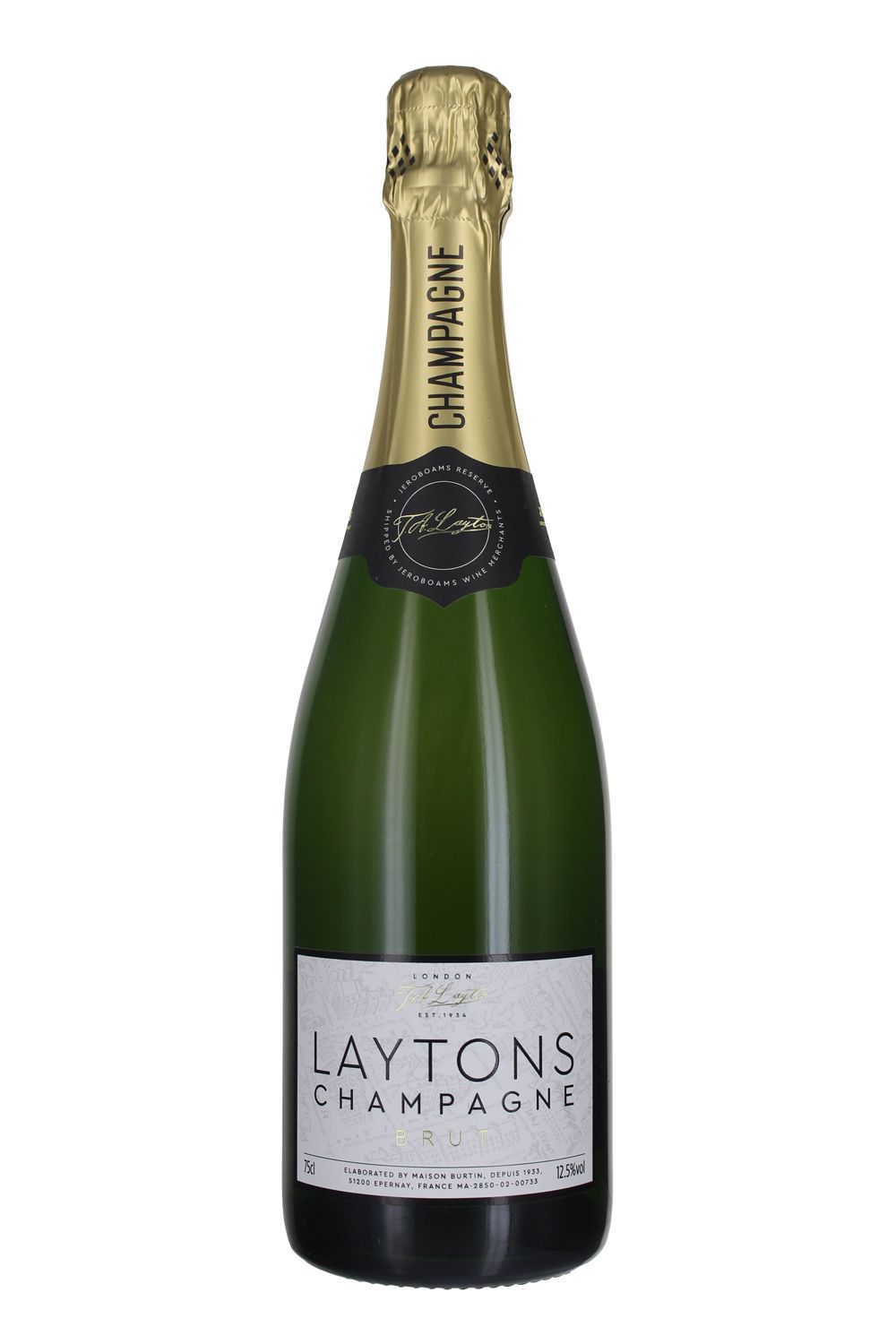
N.V. Brut Reserve, Champagne Laytons
 Add to Wishlist
Originally conceived in the 1980s, Laytons fizz was one of the very first own-label Champagnes. Made by legendary chef de cave Daniel Thibault of Charles Heidsieck, it made quite the splash with the critics, and when Thibault’s passing nece ssitated a move to Château Burtin, part of the Lanson group, its style remained the same. A minimum three-year bottle age ensures a certain autolytic element, but in a light and refreshing style – reflective of the generous proportion of Ch ardonnay in the blend – and making for an elegant, easy-drinking, lemon-apple character that is unashamedly the perfect party starter rather than a gastronomic wine – a quaffer with quality.

Tasting notes
I cannot imagine that anyone reading these notes has not tasted this wine. If this is the case, then shame on you! While most serious independent expert merchants give up on the Sisyphean task of creating a fabulous own-label Champagne, J eroboams puts its head down and charges forward. The result is one of the great wines in our country. Forget the High Street and its ‘extra special’, ‘different tasting’, ‘best’ and ‘finest’ versions and stick to this perpetually reliable and downright delicious sparkler. It is a definitive aperitif style, given its freshness and bounce, and you are guaranteed a knowing nod of approval when your guests spot the label, too! -Matthew Jukes
At a glance
producer
sub-region
region
country
grape variety
vintage
colour
abv
maturity
Not available
organic status

Champagne
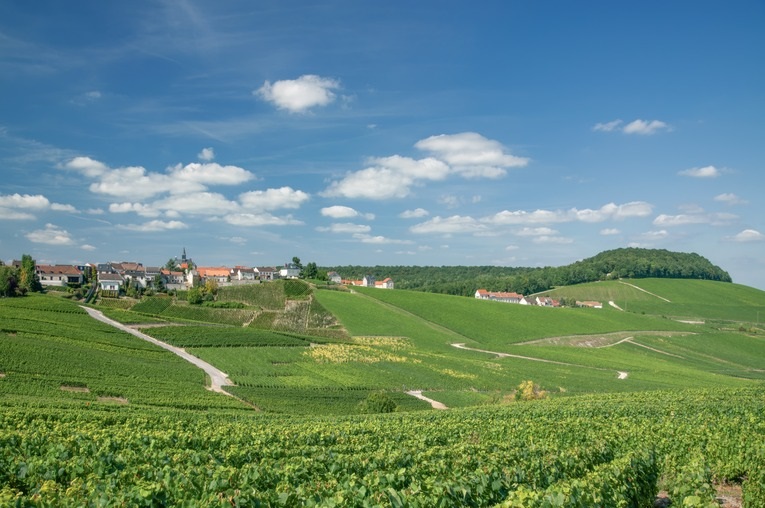
Grapes have been grown in the Champagne region since Roman Times. These vineyards were maintained by the church throughout the many waves of conquerors including the Franks, the Goths, the Burgunders, the Vandals, and the Huns. However, reliable production of ‘modern Champagne’ only became possible at the end of the 17th Century. As the first fermentation stalled owing to the cool temperature of the chalk cellars, the yeast would continuing consuming the residual sugars as it became reactivated by the warmer temperatures of spring and summer. Bottles would explode everywhere. Attempting to stop this peculiar phenomenon, the cellar master at the abbey of Hautvillers, Dom Perignon, noticed that this wine was actually quite pleasant. He sought out to source a sufficiently sturdy bottle that could withstand these pressures. And with the coal-fired bottle produced by an English glassworks, the modern Champagne was born. The Champagne region is at the Northernmost limit of vine cultivation, although with the effects of global warming we are seeing this change with England now taking the crown for the northernmost limit of vine cultivation, particularly with reference to producing sparkling wine. Extremities and fluctuations in temperature significantly affect the vineyards with the greatest risk being spring frosts. The region comprises three main vineyard areas: Cote des Blancs, Vallee de la Marne and Montagne de Reims. Spread over these three areas are 15,000 growers and 290 Champagne houses. Given the latitude of Champagne, the three main grape varieties of Chardonnay (giving freshness, acidity and citrus aromas, found most in the Cotes de Blancs), Pinot Noir (mostly in the northern Montage de Reims, contributing body, structure and red berry aromas) and Pinot Meunier (Vallee de la Marne, providing suppleness and fleshiness) are strained to reach full ripeness. Vineyards within these regions are graded by quality, with only 17 receiving the Grand Cru classification, and only 44 adjudged to be of Premier Cru quality. Of course, the wine from Champagne are further classified based on their composition and resultant style. Non-vintage, made from a multi-year blend of wines, is the most widely produced. With NV Champagnes, the grapes from one vintage will form the basis of the blend, with other so-called “reserve wines” allowing the Chef de Cave to produce a consistent house stye, vintage after vintage. This needs to be aged for a minimum of 18th months prior to release onto the market. Vintage wines are made from grapes grown in a single year and, although they represent a small percentage of wines produced in the region and are criminally unvalued, make some of the highest quality and most prestigious wines. A further host of classifications include those relating to the level of sugar in the final wine. Brut, with less than 12 grams of sugar per litre, is by far the most popular. Brut Natural or Brut Zero contains less than 3 grams, with Demi-Sec or Rich denoting a sugar content north of that found in Brut. Rose is another style whose production differs to that of other regions, where the wine maker has a choice between the saignee method, where the clear skins are left to macerate with the clear juice for a while or, unusually, red wine can be mixed with white to produce a salmon-flecked wine. Recently Disgorged (RD) denotes a Champagne that undergoes extended ageing prior to disgorgement before going out to market, allowing the wine to retain freshness. Luxury or Prestige Cuvees are usually the top wines produced by the estate and, as such, represent the heights to which Champagne can ascend. Blanc de Blanc, made exclusively from Chardonnay, and Blanc de Noirs, made from red grapes, cover the main Champagne classifications. While the region is known for the Grande Marques, such as Moet, Veuve Cliquot and Laurent Perrier, Champagne is awash with boutique producers, many of whom grower their own grapes. These producers, known as “grower Champagnes”, sit at odds with the Grande Marques who have various contract with grape growers, and own very few vineyards themselves.
![N.V. Petite Porte Extra Brut, Porte Noire Champagne (75 cl) - Bottle [310438100000600750]](https://du5d0xxkq463h.cloudfront.net/media/catalog/product/placeholder/default/In_bond.jpeg)
![2018 La Grande Dame x Simon Porte Jacquemus, Veuve Clicquot (75 cl) - Bottle [309683720180600750]](https://du5d0xxkq463h.cloudfront.net/media/catalog/product/cache/e748d881e54f2c9368fad2d1a1421cc2/3/0/3096837.jpg)
![2017 Louis Roederer Brut Rose (75 cl) - Bottle [108253920170600750]](https://du5d0xxkq463h.cloudfront.net/media/catalog/product/cache/e748d881e54f2c9368fad2d1a1421cc2/1/0/1082539new.jpg)
![N.V. Grande Cuvee 172eme Edition, Champagne Krug (75 cl) - Bottle [303484600000600750]](https://du5d0xxkq463h.cloudfront.net/media/catalog/product/cache/e748d881e54f2c9368fad2d1a1421cc2/k/r/krugedition.jpg)
![N.V. Heritage Brut, Champagne Laurent-Perrier (75 cl) - Bottle [304142000000600750]](https://du5d0xxkq463h.cloudfront.net/media/catalog/product/cache/e748d881e54f2c9368fad2d1a1421cc2/3/0/3041420.jpg)