


Back
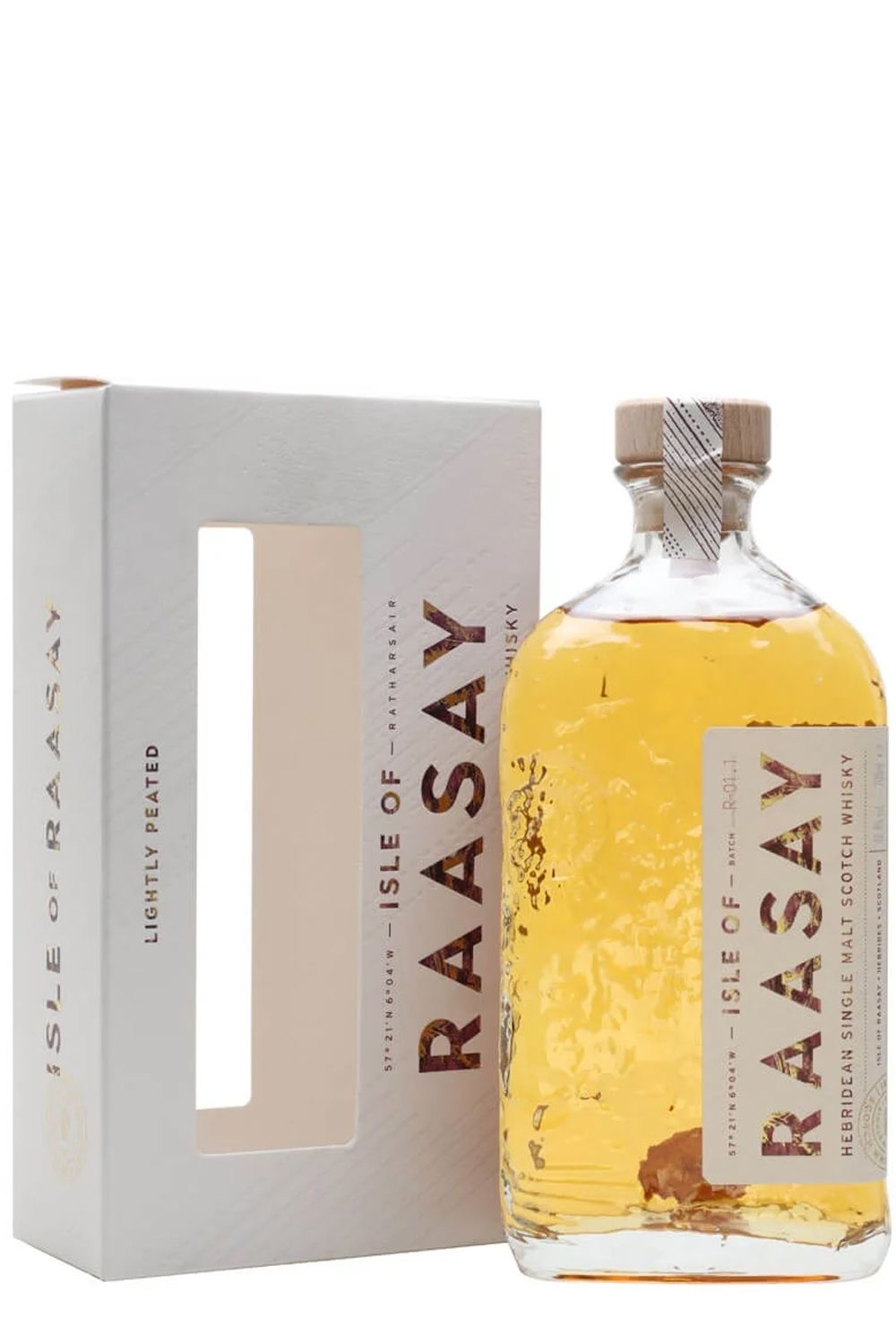
Isle of Raasay The Draam Single Malt Whisky
 Add to Wishlist
Tasting notes
Raasay's Draam is made from both peated and unpeated Concerto barley, with both spirits aged in first fill ex-Rye Whiskey, virgin Chinkapin oak and first fill Bordeaux red wine casks. From these six unique liquids a vatting is made, giving a whisky that seeks to emulate the older styles of Hebridean single malts, with subtle, fragrant smokiness balanced with dark fruit flavours.
At a glance
producer
sub-region
region
country
grape variety
vintage
colour
abv
maturity
Not available
organic status

Highlands
If it is relatively absurd to think that two distilleries located next to eachother in Speyside would produce a similar style of whisky to one another, imagine how incredibly wild it is to think that the Highlands as a region can be neatly generalised. Such are the distilleries dispersed across a huge expanse of land, it goes to show just how simply amazing the concentration of distilleries in Speyside is - and how wildly expansive the Highlands is. It’s boundary is drawn from the Highland line, which starts just north of Glasgow - around Loch Lomond - taking in the northern outskirts of Stirling, Perth and continues along the River Tay. However, this was a political boundary that was abandoned in 1816. So, when we are talking about the Highlands, we are talking about everything north of Glasgow and Stirling, as far west as Oban, north to Thurso, then east round Inverness, Aberdeen and down to Dundee, but crucially not including Speyside. This huge expanse is what people think of when they think of Scotland: powerful, dramatic landscapes, Munros capped with snow, picturesque lochs and dense forests of Scots Pine. Simply put, it is stunning. When we talk of the Highlands, we need to talk of variation of style within the region itself. Even then, we need to tread carefully as it the land of innovation, risk taking, and definition of self-identity that doesn’t sit well with generalisation. It is generally split up into five sub-regions: Southern, Central, Eastern, Northern and Western Highlands. Southern and Central are typified by lightness of body and fruit character. Moving to Eastern and Nothern Highlands, the whiskies generally become fuller, with the former more dry, pungent and incorporating some peat, while the latter features more cereal sweetness and fruit. Western is much more sparse, with the soft, sweet Oban contrasting with the thick, rich and rounded Ben Nevis.
![Aberfeldy 16 Year Old Single Malt Scotch Whisky (70 cl) - 70CL [214098800000600700]](https://du5d0xxkq463h.cloudfront.net/media/catalog/product/cache/e748d881e54f2c9368fad2d1a1421cc2/2/1/2140988.jpg)
![Nc'Nean Quiet Rebels: Gordon Organic Single Malt Scotch Whisky (70 cl) - 70CL [292744400000600700]](https://du5d0xxkq463h.cloudfront.net/media/catalog/product/cache/e748d881e54f2c9368fad2d1a1421cc2/2/9/2927444.jpg)
![Thompson Bros SRV5 8 Year Old Blended Malt Scotch Whisky (70 cl) - 70CL [230907500000600700]](https://du5d0xxkq463h.cloudfront.net/media/catalog/product/cache/e748d881e54f2c9368fad2d1a1421cc2/2/3/2309075.jpg)
![Aberfeldy 12 Year Old Single Malt Scotch Whisky (70 cl) - 70CL [195790100000600700]](https://du5d0xxkq463h.cloudfront.net/media/catalog/product/cache/e748d881e54f2c9368fad2d1a1421cc2/1/9/1957901.jpg)
![Loch Lomond Inchmurrin 12 Year Old Single Malt Scotch Whisky (70 cl) - 70CL [139743700000600700]](https://du5d0xxkq463h.cloudfront.net/media/catalog/product/cache/e748d881e54f2c9368fad2d1a1421cc2/1/3/1397437.jpg)