


Back
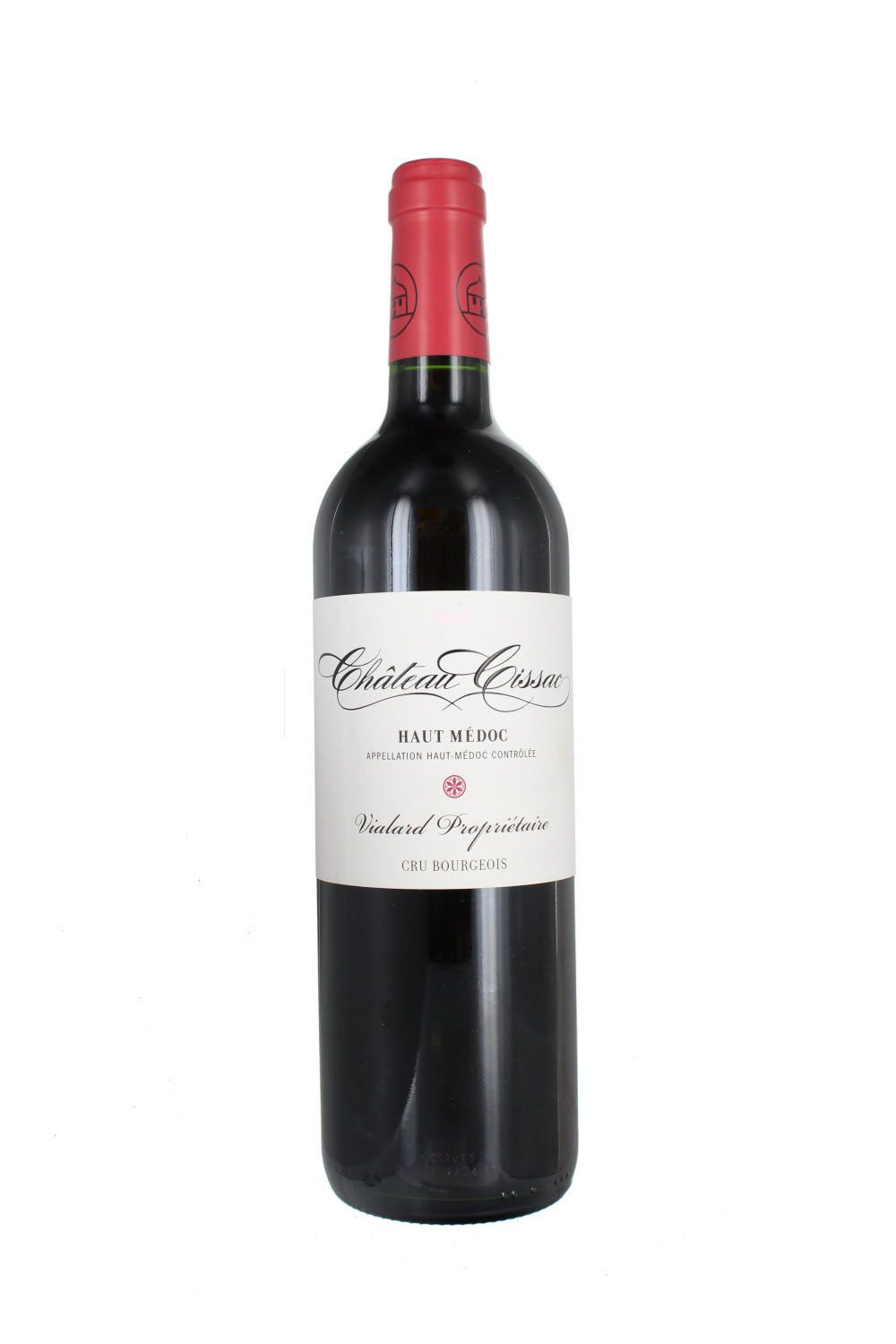
2017 Chateau Cissac
 Add to Wishlist
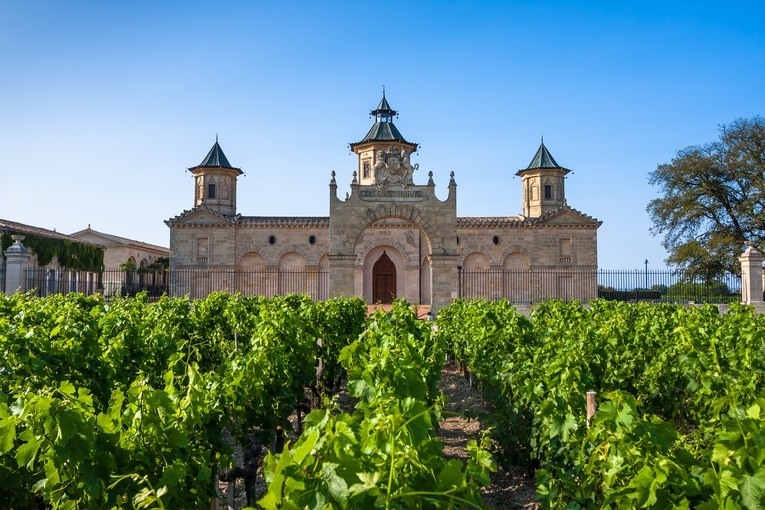
The magnificent XVIIIth century Château Cissac was built on the remains of a Roman villa. Today, it is run by Marie Vialard, a direct descendant of Jacques Mondon who bought the estate in 1895, and she is producing the very best wine the es tate has seen to date.
Tasting notes
Deep coloured with a nose of cooked fruits and fine oak. The palate is quite generous, with cassis and cedar notes, some dried tobacco and fine tannins.
At a glance
producer
sub-region
region
country
grape variety
vintage
colour
abv
maturity
organic status

Reviews
The 2017 Cissac has a well defined bouquet with blackberry, cedar, brown spices and a touch of leather, some new oak (30%) needing a few months to fully integrate. The palate is medium-bodied with supple tannins, a fine bead of acidity and good grip. A saline finish urges you back for another sip. This is a commendable Cissac that makes the most of the vintage. Recommended as it is often a great value.
Neal Martin
The 2017 Cissac has a well-defined bouquet with red cherries, crushed strawberry and light rose petal scents. The palate is medium-bodied with supple tannin, crisp acidity, vivid red berry fruit with a fresh and quite minerally finish. This is a very commendable Haut-Médoc from Cissac and it should give 12 to 15 years of drinking pleasure.
Neal Martin
Bordeaux
Bordeaux is the largest fine wine district on Earth, on average making over 70 million cases of wine annually out of a French total of nearly 500 million cases. Between 85-90% of this is red wine, 5% is rosé, 1.5% is sweet and the remainder dry white. Whilst well over half of this wine is labelled as Bordeaux or Bordeaux Supérieur AC, the part that gets the attention of wine lovers and commentators the world over comes from the great communes of the Médoc, from Graves and Pessac-Léognan, from the Libournais communes of Pomerol and St.Émilion and for Sweet wines, from Sauternes and Barsac. Comprising over 12,000ha of vineyards, more than 10,000 wine producers and 50 different AOCs, Bordeaux can be difficult to navigate if only for its sheer scale. There are, however, a few ways to break up this behemoth of wine production. The Left Bank, north of the city of Bordeaux, comprises the sub-regions of Medoc, Pessac-Leognan and Graves. Cabernet Sauvignon is dominant here, preferring the soils on this side of the Gironde. Whilst gravel is the common feature of the finest portion of the Médoc, the quality of the terroir is influenced also by the underlying bedrock, by the depth of the gravel and by the quantity of clay and sand mixed in. St Julien, with deep gravel beds and a touch more clay, produces wines of finesse and power, with rich fruit. In Pauillac the gravel is at its deepest, but also has a higher clay content and wines from here have the greatest power and finesse, showing cedarwood and cigar-box flavours. St.Estèphe has yet more clay and produces wines of power, tannin, higher acidity and concentrate blakcurrant. The Cru Classés are all in the south of the commune. Further north in the Médoc appellation, clay takes an increasing hold and the wines start to lose finesse and depth of ripeness. This region also includes Sauternes and Barsac, where the finest sweet wines in the world are made. Sauternes relies on the development of botrytis cinerea, otherwise called noble rot, a fungus that, if conditions are right, concentrates the grapes and gives them a unique flavour and rich texture. Downstream and on the other side of the Girdonde, is the Right Bank. Here, Merlot is supreme, where the climate is less conducive to ripen Cabernet Sauvignon, France and Petite Verdot. At Blaye and Bourg, the soils are of clay and limestone and are too heavy to make the finest wines, although plenty of quite robust and good value wine comes from here. To the East of Libourne in Pomerol and St. Émilion, the soils are a mixture of gravel, clay with limestone also on the hills, where the finest wines are made. On lower ground near the river the soils become sandy and lighter wines are made here. Whereas the Médoc is a fairly flat, monotonous monoculture, The Libournais is rolling countryside, with woodland and other crops and is a far more attractive area. The majority of Bordeaux AOC wine comes from this large area between the rivers Garonne and Dordogne and recent times have seen a significant number of properties acquired by Chinese investors, with the wine being shipped straight home. Entre-Deux-Mers is only used on white wines (although many of these are labelled Bordeaux Blanc), whilst the reds carry Bordeaux or (if higher in alcohol) Bordeaux Supérieur. Whilst much of the land is undistinguished, the far north has limestone soils similar to St. Émilion and some real potential is being realised. The Côtes encompass Francs and Castillon in the Libourne, Bourg and Blaye, across the Gironde from the Médoc which produce simple sturdy reds, Ste Foy producing wines of all colour that are similar to Bergerac and Cadillac making solid dessert wines and faintly rustic reds on the right bank of the Garonne. Some decent value wine can be found in all of these and occasionally something quite special and standards have improved here drastically (and they needed to) in the last 30 years. Whilst the excitement in generated by the top châteaux, the vast majority of the market, in both volume and value terms, lies in wines that sell between €5 and €15 ex cellars (£10-30 on a UK shelf). Around 1 in 7 bottles of wine made in France originates in Bordeaux and a quarter of these sell at under €3 a bottle ex cellars. Under 5% sell for more than €15. Those chateaux included in the vaunted 1855 Classification, which ranked the chateau according to the sale price each property attained at the time, command the highest prices, with the majority of their wines sold en primeur in the late spring following harvest, while the wine remains in barrel. The historic reputation, along with the current prestige, mean that Bordeaux is the reference point of quality for many wine lovers, collectors and wine producers throughout the world.
![2023 Le Petit Cheval, Chateau Cheval Blanc, Saint-Emilion Grand Cru (75 cl) - Bottle [101395120230600750]](https://du5d0xxkq463h.cloudfront.net/media/catalog/product/placeholder/default/In_bond.jpeg)
![2023 Le 2 de Romer du Hayot, Chateau Romer du Hayot (38 cl) - Half Bottle [185851420231200375]](https://du5d0xxkq463h.cloudfront.net/media/catalog/product/cache/e748d881e54f2c9368fad2d1a1421cc2/1/8/1858514new.jpg)
![2015 Chateau Barde-Haut, Saint-Emilion Grand Cru (75 cl) - Bottle [100626320151200750]](https://du5d0xxkq463h.cloudfront.net/media/catalog/product/cache/e748d881e54f2c9368fad2d1a1421cc2/1/0/1006263.jpg)
![2022 Chateau Le Prieure, Saint-Emilion Grand Cru (75 cl) - Bottle [101442420220600750]](https://du5d0xxkq463h.cloudfront.net/media/catalog/product/cache/e748d881e54f2c9368fad2d1a1421cc2/1/0/1014424.jpg)
![2022 Chateau Vray Croix de Gay (75 cl) - Bottle [101630120220600750]](https://du5d0xxkq463h.cloudfront.net/media/catalog/product/cache/e748d881e54f2c9368fad2d1a1421cc2/1/0/1016301.jpg)
![2022 La Reserve de la Comtesse, Chateau Pichon Longueville Comtesse de Lalande (75 cl) - Bottle [101463920220600750]](https://du5d0xxkq463h.cloudfront.net/media/catalog/product/cache/e748d881e54f2c9368fad2d1a1421cc2/1/0/10146393.jpg)
![2016 Chateau Grand-Puy Ducasse, Fifth Growth (75 cl) - Bottle [101077420161200750]](https://du5d0xxkq463h.cloudfront.net/media/catalog/product/cache/e748d881e54f2c9368fad2d1a1421cc2/1/0/1010774.jpg)
![2019 Collines de l'If, Chateau l'If, Saint-Emilion Grand Cru (75 cl) - Bottle [188373220190600750]](https://du5d0xxkq463h.cloudfront.net/media/catalog/product/cache/e748d881e54f2c9368fad2d1a1421cc2/1/8/1883732.jpg)