


Back
2011 Monte Bello, Ridge Vineyards
This wine is currently unavailable. Browse our bestsellers or get in touch to see if it's available in one of our shops.
At a glance
producer
sub-region
Not available
region
country
grape variety
Not available
vintage
colour
abv
maturity
organic status
Not available

Reviews
My third encounter with the 2011 Ridge Monte Bello in the last year revealed a wine that seems to be aging in reverse. Though the previous two bottles were beginning to mature aromatically, this one seems frozen in time. Today, it is almost shockingly primary and very sinewy. Black cherry, brambly berry fruit, menthol and mocha unfurl in a dark, brooding package that feels decidedly richer than one might expect from this cool growing season in the Santa Cruz Mountains. Though expressive and totally enjoyable today, this showing indicates that the 2011 may very well have more left in the tank than I initially thought.
Billy Norris
Ridge's 2011 Monte Bello shows beautifully, even next to some of the more important vintages that are part of this vertical. Dark red cherry, plum, smoke, spices and graphite form an attractive core of flavors and textures. The 2011 is a b it slender and likely to mature earlier than some of the more structured vintages, but that only contributes to its near and medium-term accessibility. Hints of sage, lavender and black fruits add the final shades of nuance. This is one of the better showings of the 2011 from bottle.
Antonio Galloni
The 2011 Monte Bello (87% Cabernet Sauvignon, 9% Merlot, 4% Cabernet Franc) emerges from the glass with tobacco, grilled herbs, smoke, incense and plums meld together in this soft, beautifully textured Monte Bello. The 2011 is a wine of exc eptional textural finesse. The 100% new oak is totally integrated. In 2011, Ridge used a total of 18 of a possible 24 lots for the final blend. The presence of 88% Cabernet Sauvignon is the highest since the 1980s. I expect the 2011 to be a relatively early drinking Monte Bello, but time will be the judge.
Antonio Galloni
The 2011 Ridge Monte Bello is in a great spot where it is just starting to show lovely signs of aromatic development. Even so, the 2011 remains rich, deep and imposing, with tons of depth and plenty of mountain intensity. Black cherry, grav el, spice, menthol, licorice and cloves all open with a bit of coaxing. The tannins are a bit grainy, otherwise this is a very good Monte Bello in a very challenging year.
Antonio Galloni
The 2011 Monte Bello is quite open in this vintage. Silky, soft and accessible, the 2011 appears to be built for medium-term drinking. Sage, rosemary, lavender, licorice and menthol add complexity to a core of dark plum and cherries as the 2011 opens up in the glass. Overall, the 2011 is a solid Mont Bello, if a little less exciting than it was last year. In 2011, the blend is 87% Cabernet Sauvignon, 9% Merlot and 4% Cabernet Franc.
Antonio Galloni
California
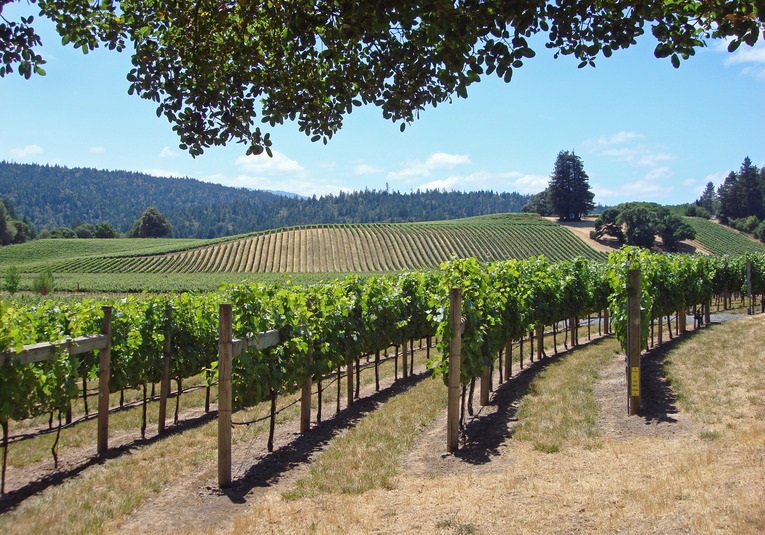
California is a state of extremes: wildfires, storms, Hollywood and its wine industry is no different. It’s easy when thinking of California to zone in quickly on Napa Valley by far the most famous region, however only 4% of California’s 3.42 billion bottles sold in 2018 were produced in Napa Valley. So where is the rest of this wine produced? Most of the wine produced in California is grown in Central valley, a large region inland from Sonoma and Napa. This is where a wine synonymous with California is produced, the sweet and pink White Zinfandel. This style of wine came about by accident when Bob Trinchero (Trinchero Family Estates) was experimenting with his much beloved Zinfandel in an attempt to make it even more robust. In 1972 Trinchero drew off some of the free-run juice and fermented it as he would a white wine producing a pale pink light bodied wine. The first production was only 220 cases, but it was in 1975 when he ramped up production after fermentation stalled leaving around more residual sugar, the extra sweetness was popular. The Sutter Home White Zinfandel grew to become to become the most popular domestic wine by 1987, and now sells between 36 million and 42 million bottles of the wine per year! The history of wine production in California is similar to many of the regions and countries of North and South America. Vines were introduced by Spanish Franciscan Missionaries in the mid-19th century, who required holy wine for communion. While other states dedicated their efforts to producing popular wine, such as New York, Virginia and Ohio, plantings across South California grew slowly before reaching North California. The Gold Rush of the mid-19th century brought huge fortune to the wine industry—thirsty work!—before the industry all but collapsed as Prohibition came into force in 1919. Some producer maintained their plantings by selling their fruit as table grapes. Recovery was slow over the following decades, until the 1960s, 70s and 80s brought a boom in not just plantings and wineries, but understanding and technological nous. The infamous blind tasting of 1976, dubbed the “Judgement of Paris” saw many California wines beat their French counterparts, showing the world that California wine was a growing force to be reckoned with. California comprises 135 AVAs—“American Viticultural Areas”—and counting. Quality wine production in concentrated in a few distinct areas: Napa Valley, Sonoma County, Mendocino County, and Central Valley. At just 30 miles long, Napa Valley produces some of the finest Cabernet Sauvignon in the world owing to its diversity of terroir and altitudes. Yountville, Mt. Veeder, Spring Mountain, Rutherford and Coombsville are the key sub-regions. Sonoma County is Pinot Noir and Chardonnay country, with pockets of vineyards lying along the coast and further inland, including Alexander Valley, Caerneros and Russian River Valley. A cooler climate, much of Mendocino County is actually forest and fruit trees, with Anderson Valley and Mendocino Ridge two notable sub-regions producing elegant, mineral-driven wines. Lodi is the main sub-region within Central Valley, and where more than 30% of Zinfandel is grown, much of which from old vines. Undoubtably California is producing a much more diverse range of wines than in the past, with new AVAs being established and many more innovative producers trying their luck in the land of opportunity.
![2024 Aries Chardonnay, Marine Layer (75 cl) - Bottle [208895220241200750]](https://du5d0xxkq463h.cloudfront.net/media/catalog/product/cache/e748d881e54f2c9368fad2d1a1421cc2/2/0/2088952.jpg)
![2023 Chardonnay, Valravn (75 cl) - Bottle [214516920231200750]](https://du5d0xxkq463h.cloudfront.net/media/catalog/product/cache/e748d881e54f2c9368fad2d1a1421cc2/2/1/2145169.jpg)
![2022 Placida Vineyard Grenache, Newfound (75 cl) - Bottle [303223320220600750]](https://du5d0xxkq463h.cloudfront.net/media/catalog/product/cache/e748d881e54f2c9368fad2d1a1421cc2/3/0/3032233.jpg)
![2023 Pinot Noir, Pavette (75 cl) - Bottle [227939620231200750]](https://du5d0xxkq463h.cloudfront.net/media/catalog/product/cache/e748d881e54f2c9368fad2d1a1421cc2/2/2/2279396.jpg)
![2021 Marine Layer Moon Mountain Cabernet Sauvignon, Sonoma County (75 cl) - Bottle [304600520210600750]](https://du5d0xxkq463h.cloudfront.net/media/catalog/product/cache/e748d881e54f2c9368fad2d1a1421cc2/2/0/2088965.jpg)
![2019 Shake Ridge Mourvedre, Newfound (75 cl) - Bottle [205994120191200750]](https://du5d0xxkq463h.cloudfront.net/media/catalog/product/cache/e748d881e54f2c9368fad2d1a1421cc2/2/0/2059941.jpg)
![2022 Pinot Noir, Alma de Cattleya (75 cl) - Bottle [187451620221200750]](https://du5d0xxkq463h.cloudfront.net/media/catalog/product/cache/e748d881e54f2c9368fad2d1a1421cc2/1/8/1874516.jpg)