


The complete guide to Spanish Cava
See our other articles...
Previous Article
A guide to the Burgundy wine classification system
Next Article
How to choose a wine from the Rhône Valley
The Cava wine industry is a Spanish powerhouse, producing more than 250 million bottles of sparkling wine annually. The heartland of Spanish Cava remains Penedès, a picturesque region located west of Barcelona. In fact, over 95% of all Cava is made in the hills of Sant Sadurní d'Anoia (a sub-region of Penedès). Cava is unlike the vast majority of appellation wine, confined by geographical boundaries, other provinces in Spain are entitled to market Spanish wine under the designation.
Yet, the category has long been given faint praise as an "affordable" bubbly, a euphemism for a low-quality Champagne imitation. It is an affordable sparkling wine but is neither low-quality nor a reflection of Champagne. Cava is generally attractively priced and well-made, partially because grape prices are significantly lower than in Champagne region. However, the varieties used to make Cava are often very different to those used in Champagne, so the aromatic profile does not particularly resemble it. Ripeness is also seldom an issue in the Mediterranean climate of Catalonia.
While many brands offer good value, there is no shortage of deluxe cuvées available. Premium Cava has everything: creaminess with sparkle, lightness with depth and great complexity. It is far more individualistic than just a cheap Champagne alternative.
 There are critical differences between Cava and Champagne, aside from the varieties used and where they are produced. For instance, most Champagne (aside from vintage Champagne) contains wines from two or more harvests. In contrast, the Spanish like to blend grape varieties but separate every vintage. In addition, due to the warmer growing conditions in Catalonia, a sizeable volume of premium Cava does not contain much sugar. These styles are called Brut Nature (containing 0-3 grams of sugar per litre, g/l) or Extra Brut (containing 0-6g/l). Finally, Champagne rosé has been made for over two centuries by blending white and red wine. However, according to the regulations, Cava cannot be made this way. Therefore, pink Cava uses the maceration method: fermenting red wines with their skins to extract colour. The result is a robust tannin-rich rosé.
Click on a link to jump to that section:
A history of Cava wine
The vineyards of Sant Sadurní d'Anoia have been used to produce white wine since early Roman times. However, it was not until the 19th century that the first sparkling wines appeared. Its emergence was based on a series of experiments that eventually gave birth to a thriving industry. Scientist Luis Justo i Villanueva, the laboratory director at an agricultural institute in Catalonia, did much to lay the groundwork. After visiting the Champagne region in the 1800s, he helped to teach Spanish winemakers about the traditional method (Methode champenoise) of sparkling wine production. Their first experiments involved the classic varieties of French Champagne, yet, Josep Raventós of Codorniu made Spain's first bubbly out of three indigenous varieties: Macabeo, Parellada and Xarel-lo. Today most of the Cava output follows his lead, although smaller quantities of mono-varietal wines are also produced. Initially referred to as "Champaña" – Spanish Champagne - the term Cava was adopted in the 1970s, when producers started to differentiate their wines from Champagne. The updated nomenclature also helped to avoid confusion. The differences between Cava and Champagne are not solely based on grape varieties and terroir. Unlike Champagne, Cava production is not restricted to one geographical area. The regulatory council, founded in 1972, continues to allow producers in La Rioja, Zaragoza, Extremadura, Navarra and Valencia to use the designation for their sparkling wines. Nevertheless, grape varieties, ageing and quality are all strictly regulated.Key grape varieties used in Cava
- Macabeo (Viura) forms the backbone of most Cava wines, contributing fruit, acidity, and freshness to the blend. It thrives in the higher elevation sites of Penedès, yielding top-quality fruit.
- Parellada has long been used to enhance the freshness and perfume of Cava blends. It needs a cooler site like Macabeo to maintain enough acidity during the warm summer months.
- Xarel-lo is the most crucial grape variety in Penedès for many Cava producers. It yields excellent base wine, renowned for its high levels of resveratrol – a natural preservative. Cavas intended for long ageing tend to have at least 60% Xarel-lo in the blend.
- Garnacha Tinta (Grenache Noir) is one of the grape varieties used to make Cava rosé. The style is generally rich and full-bodied, with deep colour and spicy aromatics.
Other permitted grape varieties used in Cava
- Chardonnay is increasingly adopted by Cava firms in Penedès. Chardonnay can deliver fresh and aromatic wines in particular (higher-altitude) vineyard sites.
- Pinot Noir is used by some of the top Cava labels, producing several 100% Pinot Noir sparkling wines. Proof indeed that Burgundy's signature red grape can thrive in the vineyards of Catalonia.
Cava production
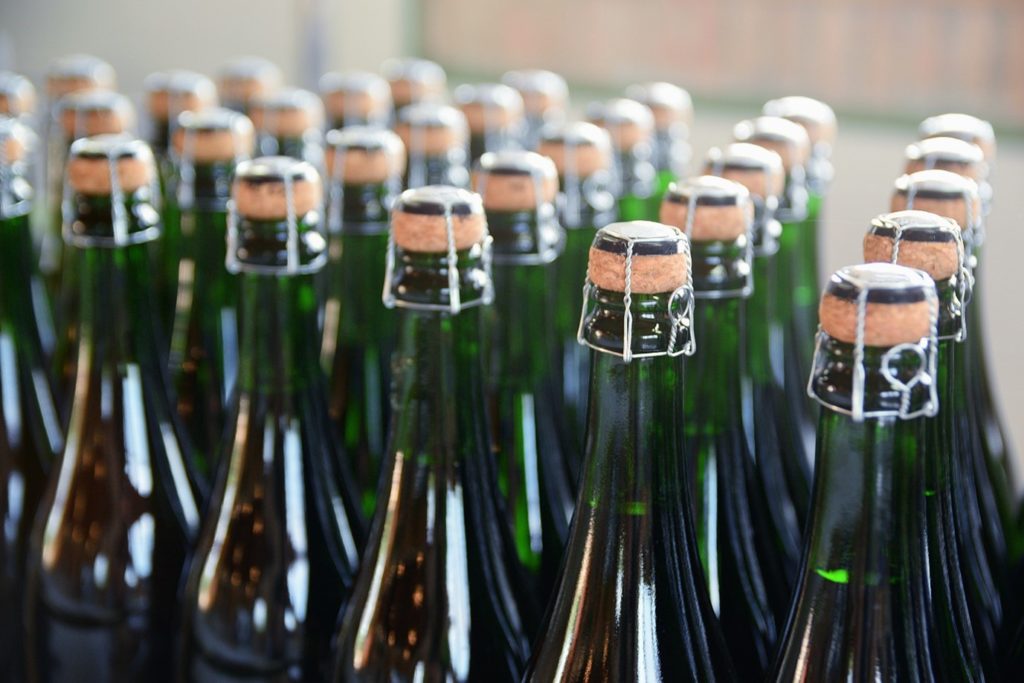
Every single bottle of Cava is made using the Methode Champenoise. This is in direct contrast to Prosecco, the majority of which gains its sparkle from secondary fermentation in the tank before bottling under pressure. However, the traditional method dictates that the second fermentation must be undertaken in bottle. It is reasonable to draw comparisons between Cava and Champagne regarding wine production.- After the grapes are pressed, the juice is fermented at low temperatures, typically in stainless steel tanks. These still base wines are then bottled with the addition of yeast and sugar - liqueur de tirage.
- As the fermentation gets underway, CO2 is released into the sealed wine. Winemakers then age their Cavas on the lees (dead yeast cells) for anything from nine months to ten years, gaining complexity and depth.
- Disgorgement is then undertaken. This process removes yeast sediment from the bottle by letting the lees settle in the neck of the bottle before running it off.
- After disgorgement, some wine is lost; this is replaced by a sugar and base wine mixture – called dosage – which determines the sweetness of the final sparkling wine. The dosage particularly helps to balance out the bracing acidity of sparkling wine.
There are critical differences between Cava and Champagne, aside from the varieties used and where they are produced. For instance, most Champagne (aside from vintage Champagne) contains wines from two or more harvests. In contrast, the Spanish like to blend grape varieties but separate every vintage. In addition, due to the warmer growing conditions in Catalonia, a sizeable volume of premium Cava does not contain much sugar. These styles are called Brut Nature (containing 0-3 grams of sugar per litre, g/l) or Extra Brut (containing 0-6g/l). Finally, Champagne rosé has been made for over two centuries by blending white and red wine. However, according to the regulations, Cava cannot be made this way. Therefore, pink Cava uses the maceration method: fermenting red wines with their skins to extract colour. The result is a robust tannin-rich rosé.
What are the different Cava styles
There are many different categories of Spanish sparkling wine. You can get rosé or white, dry (Cava Brut) or sweet (Dulce), mono-varietal cuvées or prestige blends. There is also an official hierarchy of Cava DO, sanctioned by the regulatory council.- Cava de Guarda - wines aged for a minimum of nine months before release.
- Cava de Guarda Superior: Cava Reserva - wines aged for a minimum of 18 months before release.
- Cava de Guarda Superior: Gran Reserva - wines aged for a minimum of 30 months before release.
- Cava de Guarda Superior: Cava de Paraje Calificado
- Cava Rosado is rosé Cava made using the maceration method.