


A guide to the Haut-Médoc wine region
See our other articles...
Previous Article
A guide to the Burgundy wine classification system
Next Article
How to choose a wine from the Rhône Valley
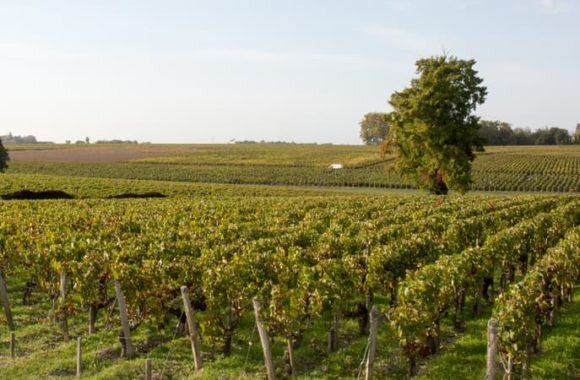
The Haut-Médoc appellation is found north of the city of Bordeaux and is part of the wider Médoc region, a peninsula that stretches from Bordeaux towards the Atlantic port of Le Verdon. The majority of vineyards are located on an eastern coastal strip that shadows the Gironde estuary. Some of the most famous names in the world of wine are found in the Médoc region, including Pauillac and Margaux. They remain the most potent symbols of France's fine wine industry.
However, a good percentage of the peninsula's vineyards fall under the jurisdiction of the Haut-Médoc appellation, which was created in 1936 and remains a hotbed of investment and premium quality. There are approximately 4682 hectares of vineyards, situated in the southern and central parts of the Médoc peninsula. Some of the most lauded châteaux in the Haut-Médoc are found to the south and west of the Médoc's four premier wine zones: Pauillac, Margaux, Saint-Estèphe and Saint-Julien. Indeed, in the case of some properties, their vineyards lie adjacent to the most famous classified estates. The best terroirs of the Haut-Médoc are no poor relation; in fine vintages, the Haut-Médoc is capable of producing superlative wines that can age for decades.
So you may wonder why the Médoc peninsula, which practically invented fine wine and still makes the most desired, also does value? In the case of the Haut-Médoc, there are several reasons. Unlike the illustrious zones of Margaux and Saint-Julien, there are relatively few classified estates in the Haut-Médoc. The great Bordeaux classification of 1885 subjected the region's châteaux to a hierarchical ranking, from First to Fifth Growth. While the small commune of Saint-Julien houses 11 notable classified growths, the larger Haut-Médoc zone has just five.
Therefore, the Haut-Médoc's châteaux have never boasted the renown—or, indeed, the high prices—of their neighbours. Additionally, the area's winegrowers are painfully aware of the fiercely competitive global marketplace in which they operate and the growing consumer intolerance of lacklustre red Bordeaux. In order to attract more attention to their wines, over 50 Haut-Médoc châteaux belong to the 'Cru Bourgeois' classification framework. This ranking, originally conceived in the 1930s, was revised in 2020 and expanded to incorporate three tiers: Crus Bourgeois, Crus Bourgeois Superieurs and Crus Bourgeois Exceptionnels. Eight ‘Exceptionnels’ are from the Haut-Médoc zone, with prices that understandably reflect that.
But this is very much a buyer's market; there are over 240 wine producers competing for your attention. Some are tiny outfits making a few thousand bottles each vintages, others are sizeable entities owned by conglomerates. Yet the overwhelming majority adhere to the Médoc's long-established traditions, at least in terms of grape varieties.
Wine production
It is very rare to encounter a single-varietal red wine in the Haut-Médoc, and only a small amount of white is made here. Winemakers have practised the art of blending for centuries, partly as an insurance policy. In rain-soaked vintages, one variety could fail to ripen properly, resulting in acidic and pinched wine. However, by cultivating several grape varieties throughout the growing season, the châteaux owners had some options to fall back on. Almost every wine made in the Haut-Médoc contains a certain percentage of Cabernet Sauvignon, the superstar red grape of the Bordeaux region. A late-ripening and full-bodied variety, Cabernet Sauvignon is celebrated for its formidable tannic structure and tell-tale aromas of cassis and cedarwood. It is almost always paired with (or subordinate to) the softer, plumper Merlot, a variety much-loved for its velvety texture and rich cocktail of red and black fruit. Cabernet Franc, Malbec and Petit Verdot are also permitted in the Haut-Médoc blends, but Malbec is seldom used. In riper vintages, winegrowers will tell you that Cabernet Franc can add acidity and structure to the final product, while Petit Verdot is appreciated for its exotic perfume; lavender, lilac and sage are typical. Of course, individual winemakers will vary the percentages of grapes used, depending on the local terroir and vintage conditions. But what unites every top châteaux in the Haut-Médoc is their ability to produce something far greater than merely the sum of its parts.View our range of wines from the Haut-Médoc subregion