


An insider's guide to Sancerre
See our other articles...
Previous Article
A guide to the Burgundy wine classification system
Next Article
How to choose a wine from the Rhône Valley
Sancerre, found on the left bank of the Loire River in central Loire Valley, offers benchmark Sauvignon Blanc: pungent,
intense and refreshing. Yet the Sauvignon Blanc grape is seldom mentioned on the front label. Pourquoi? In French wine production, more complex traditions prevail – wines are generally marketed according to their origin. The consumer is buying into a unique set of circumstances; encompassing soil, climate and winemaking philosophy. This has helped Sancerre to stay relevant, despite rising competition from New World white wine.
Indeed, Marlborough Sauvignon Blanc from New Zealand has become a very persuasive household name in the UK. This has not escaped the attention of Sancerre's winegrowers, who once held a virtual monopoly on the style. However, few critics would deny that vines planted at high densities in Sancerre produce exquisitely fresh and aromatic wines, imbued with a minerality not commonly seen elsewhere. The Loire Valley is also a region full of surprises: high-quality rosé and red wines are made from Pinot Noir in the appellation.
Click on a link to jump to that section:
Geography and terroir
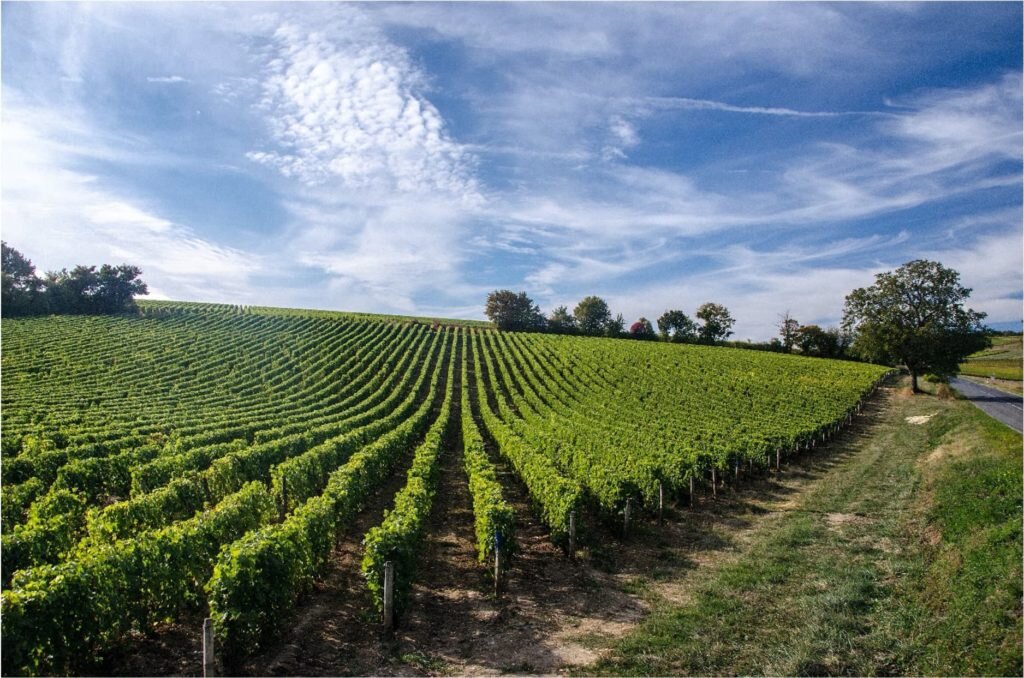
White Sancerre is one of France's most iconic labels. The appellation is situated in central France, in the eastern Loire Valley sub-region. Vineyards surround the eponymous town, a tranquil destination that possesses a timeless quality. Growers cultivate approximately 2800 hectares of vines, overwhelmingly planted to Sauvignon Blanc. It is a glorious place to visit, particularly with a glass of white wine in hand. However, white grapes are a relatively new arrival in Sancerre. In the 19th century, vineyards were dominated by red varieties, mainly Gamay and Pinot Noir. Unfortunately, the poisonous phylloxera louse arrived in Europe from the US in the late 1800s, devastating vineyards across France. Sauvignon Blanc proved to be more receptive to anti-insect bioengineering than red varieties, hence its widespread proliferation in the 20th century. Sauvignon Blanc and Pinot Noir thrive in the varied terroir of Sancerre, located on the west bank of the Loire river. The climate is continental, with cold winters, frosty spring times and warm (but rarely hot) summers. This encourages a balanced pace of ripening, yielding concentrated berries of highly aromatic fruit. Under the appellation rules, 14 villages have the right to produce Sancerre, including Chavignol (famous for its goat’s cheese), Menetreol, and Saint Satur. There are three distinct soil types found in the zone: caillottes (pure limestone layered with gravel), terres blanches (clay-limestone) and flint (silex). Metamorphic terroir can be found in both Sancerre and its immediate neighbour, Pouilly-Fumé, on the opposite bank of the Loire River. Winegrowers will say that the silex is responsible for the quintessential Sancerre aroma of gunflint. Meanwhile, chalky terroir often yields the most expressive and aromatic styles, particularly if the limestone is overlaid with gravel.Sancerre white wine production
Winemaking in Sancerre has changed a great deal over the past 20 years. It was once rustic and generally unsophisticated: white grapes were subject to a hard press, after which, the grape skins are immediately removed; the juice was not properly clarified, with minimal temperature control of fermentation. The result was a steely (if refreshing) wine, occasionally lacking fruit. But the modern paradigm has rejected this rusticity. Growers want fruit and freshness, achieved via chilling the must (referred to as “cold settling”) and fermentation in stainless steel tanks, undertaken at precisely controlled temperatures. Moreover, white wine is often filtered and stabilised before bottling. What emerges is a vibrant style of Sauvignon Blanc, with signature notes of gooseberry and gunflint that bestowed from the region's chalky, metamorphic terroir. To add structure and weight, certain cuvées are aged in French oak. The best examples are magnificent, with a silky texture and layers of complexity on the mid-palate. The length of maturation and quality of the wood is key – young wine may find their flavours subdued by the oak, spoiling the style. Thankfully, top producers always get the balance right.Shop our range of Sancerre wines here